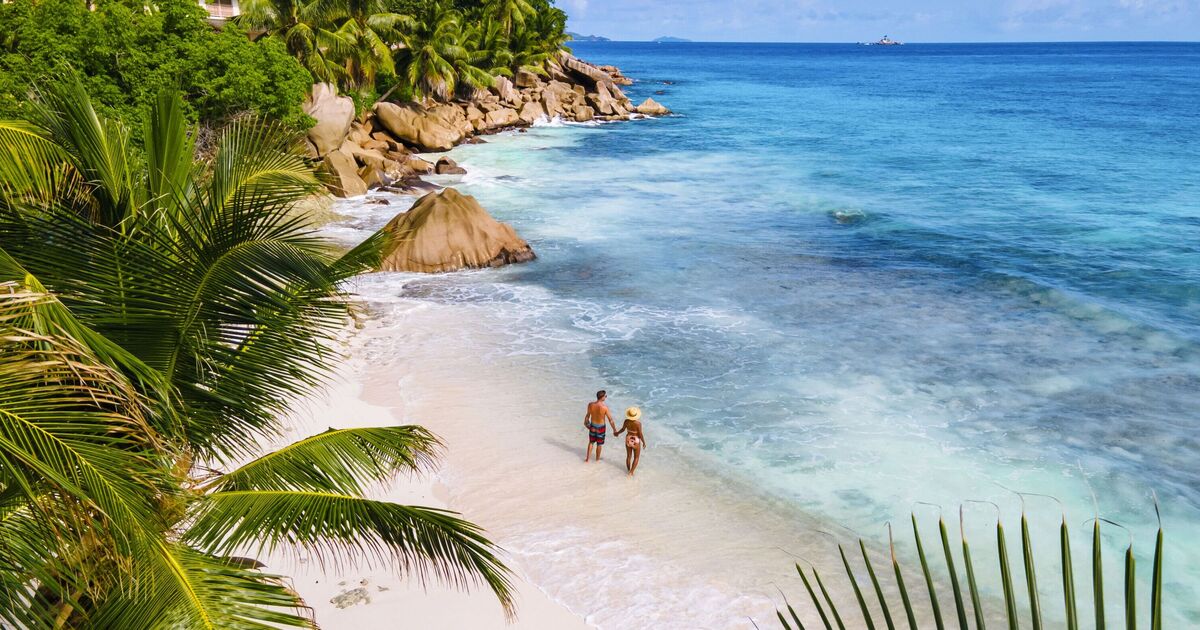
Floating in the Indian Ocean off the coast of East Africa lies the continent’s smallest country, an island nation home to a landscape so beautiful it feels like it was made for a postcard. The archipelagic state of the Seychelles is a collection of 155 islands that boasts powder-white beaches, granite boulders, turquoise water and lush jungle. It’s little wonder these islands are often called one of the best beach destinations on Earth.
October is one of the best months to go, with warm temperatures and calmer conditions as the winds begin to ease. Days typically range between 24C and 30C, and the sea stays warm, perfect for swimming, snorkelling and diving. At this time of year, the heavy southeast trade winds of earlier months ease, leaving calmer seas and gentler breezes – ideal conditions for lazy beach days. The Seychelles can be divided into two groups. The inner granitic islands, where most of the population lives and where visitors find hotels, restaurants and leisurely day trips, while the outer coral islands are more remote and best suited to longer stays.
The largest island and the gateway to the Seychelles, Mahé is home to the capital, Victoria, and the country’s main international airport. It’s the best place to start your trip, with a mix of beaches, mountains, and Creole culture. Beau Vallon is the island’s most popular beach, while Morne Seychellois National Park offers rainforest trails and sweeping views of the turquoise and deep blue ocean below.
Known for its laid-back vibe, Praslin is famous for Anse Lazio, often listed among the world’s most beautiful beaches. The island is also home to the Vallée de Mai, a UNESCO World Heritage Site where the coco de mer palm – which can only be found here – grows. Meanwhile, the charming and compact island of La Digue is best explored by bicycle. The island is home to Anse Source d’Argent, one of the most photographed beaches in the world, with striking granite rock formations. La Digue’s pace of life is slow and simple, making it a favourite for travellers looking to truly unwind.
The third-largest island, Silhouette, is largely undeveloped and covered in rainforest. It’s known for its hiking trails, rare plants, and quiet beaches. Only a handful of accommodations are available, so it feels remote and exclusive. Finally, just off Praslin, Curieuse is famous for its population of giant Aldabra tortoises, which roam freely across the island, which has become a popular day-trip destination.
Despite its small size – the country covers less than 200 square miles and has just over 100,000 residents – the Seychelles is a world leader in conservation, with nearly half its land protected. This means visitors will find unspoiled natural beauty as well as luxurious and modern comforts.
The Seychelles’ granitic islands are some of the oldest mid-ocean islands, dating back about 750 million years, having broken off from India millennia ago. The island nation is also home to the world’s smallest frog (just 11mm long) – Gardiner’s Seychelles frog (Sechellophryne gardineri) – and the rare Seychelles black parrot.
It was also the selected honeymoon spot for the Prince and Princess of Wales, who chose North Island for their private post-wedding getaway.
Return flights to the Seychelles (SEZ) in October typically start around £619, with a stop in Qatar (DOH) with Qatar Airways and a travel time of between 13 and 14 hours in total, according to Skyscanner. Accommodation ranges from high-end resorts with private villas to smaller guesthouses and self-catering stays. Whether you’re after barefoot luxury or something more low-key, there’s an option for every type of holidaymaker.